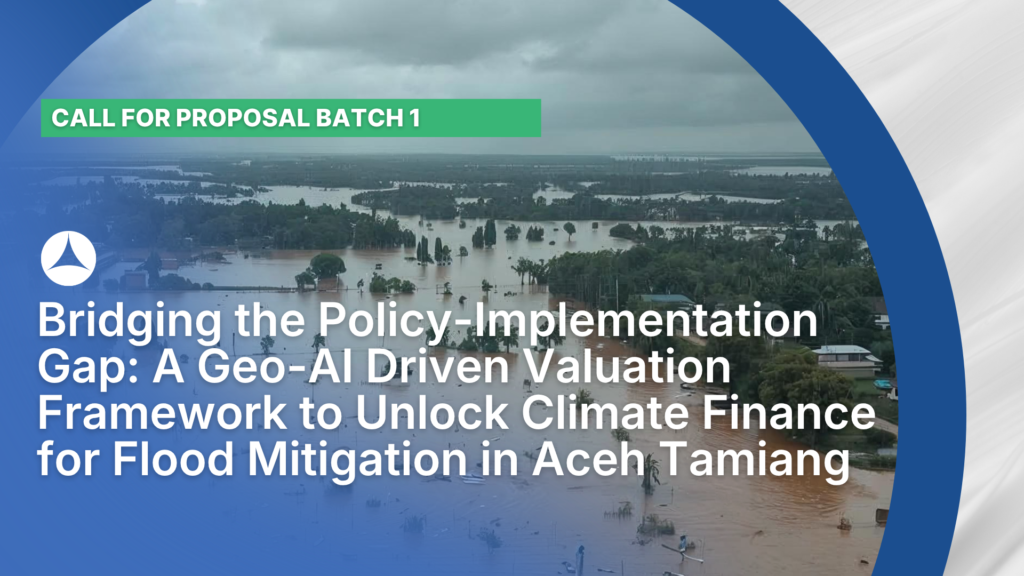
Techno-Economic Analysis of IoT-Integrated Solar Smart Farming: A Pathway for Sustainable Community-Based Climate Finance in Sumenep, Indonesia
Ringkasan Eksekutif
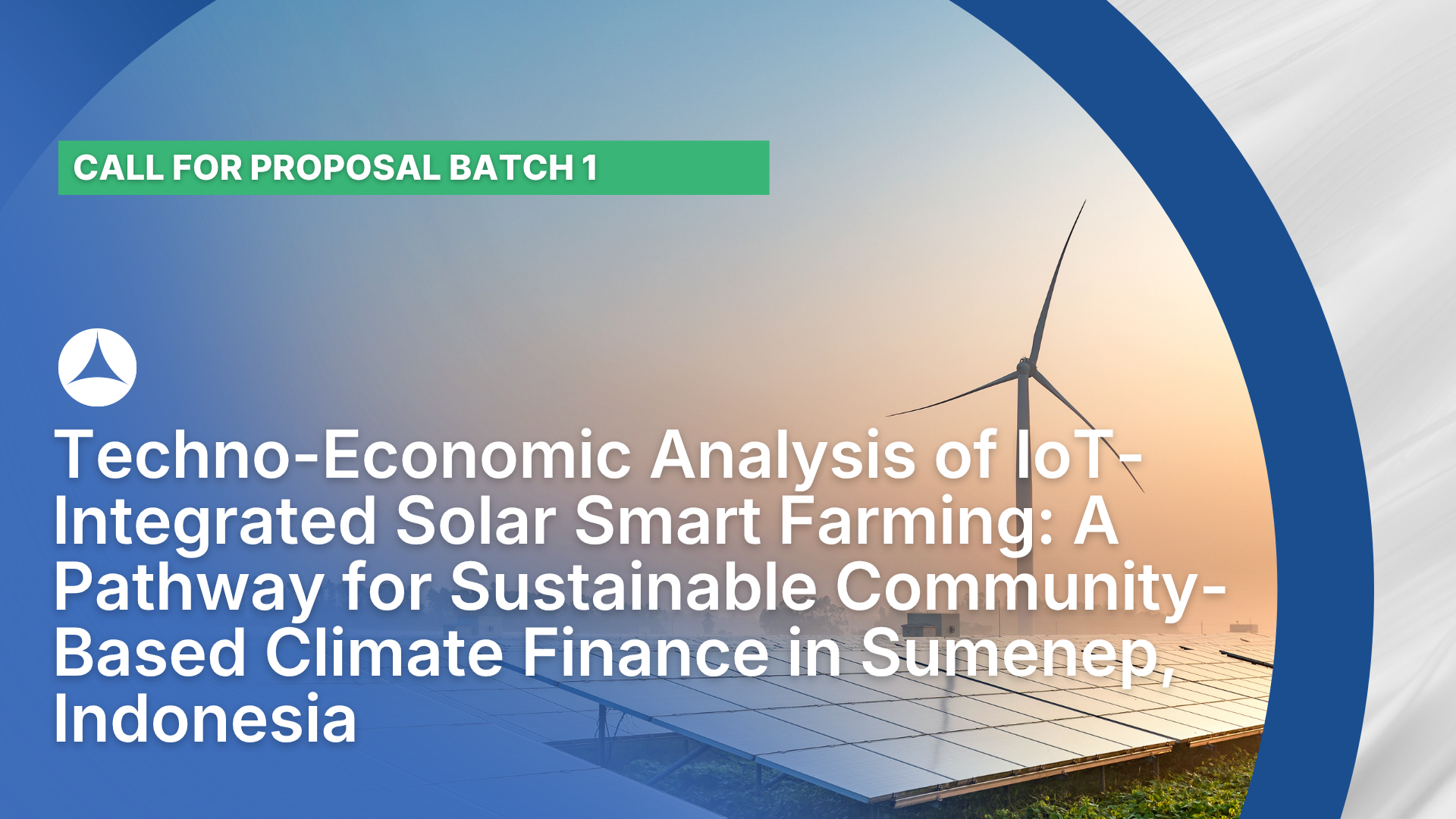
“Indonesia’s transition to a low-carbon economy necessitates the mobilization of climate finance not only for large-scale infrastructure but also for community-based initiatives that form the backbone of the local economy. However, small-scale enterprises often face barriers in accessing climate funds due to the lack of “”bankable”” business models, unproven technological resilience, and limited data on their carbon abatement potential. This gap is evident in the Arasa Sociopreneur Action (ASA) community in Sumenep, Madura, which integrates organic waste management with circular agriculture (maggot farming, catfish, poultry, and hydroponics). While their circular model is promising, manual operations result in suboptimal productivity and high operational risks, limiting their ability to attract formal financing and scale their impact.
This research proposes a Techno-Economic Analysis of an IoT-Integrated Solar Smart Farming System to demonstrate a reproducible, financially viable model for community-driven climate action. By implementing a precision farming system powered by a 100% off-grid Photovoltaic (PV) system, this study aims to: (1) Quantify the efficiency gains (productivity increases and operational cost reductions) driven by IoT automation; (2) Analyze the financial feasibility (ROI, NPV, Payback Period) to establish a “”bankable”” investment case for similar community projects; and (3) Measure the carbon abatement potential of this circular model.
Over a 10-month period, the research team will upgrade the ASA Eco Learning Hub with industrial-grade sensors, automated controls, and renewable energy infrastructure. The study utilizes a quantitative action research approach, collecting real-time data on environmental parameters, resource consumption, and yield outputs. The expected outcome is a validated “”Smart Circular Economy”” framework that proves how modest technology investments can transform social enterprises into financially sustainable, low-carbon businesses. This evidence will directly support policymakers and financial institutions in designing targeted financing mechanisms for local communities, the critical “”missing middle”” of climate actors. This supports the acceleration of an inclusive energy transition managed at the grassroots level.”
Tujuan
To perform a techno-economic analysis of an IoT-integrated solar smart farming system to measure efficiency gains, financial viability, and carbon reduction potential.
Komposisi Tim
Habibie Ed Dien
Politeknik Negeri Malang
Ade Ismail
Politeknik Negeri Malang
M. Hasyim Ratsanjani
Politeknik Negeri Malang
Vit Zuraida
Politeknik Negeri Malang
Publikasi Terkait
Unlocking the Value of Carbon Credits in Indonesia’s Geothermal Projects
Risk Mapping CCS/CCUS Value Chain in Indonesia: Guideline for Enhancing Bankability in Emerging Economies
De-risking Green Hydrogen and Ammonia Projects in Indonesia: A Risk-Based Approach to Innovative Climate Finance and Policy Design